
The Science of Glute Growth

Muscle growth is not random.
It is a physiological adaptation to applied stress.
When specific training variables are applied consistently over time, the body responds by increasing muscle size and strength.
Glute development follows the same biological principles as any other muscle group, but it must be programmed intentionally.
Progressive Overload

Progressive overload simply means doing more over time. Muscle tissue grows when it is progressively challenged beyond its current capacity.
This can occur through:
• Increasing load
• Increasing repetitions
• Increasing total weekly volume
• Improving technical execution
• Extending time under tension
Without progressive overload, adaptation stalls.
Mechanical Tension
Mechanical tension is the primary driver of hypertrophy.
This occurs when muscle fibers produce force under meaningful load, especially near the end of a challenging set.
For glutes, this means:
• Training with sufficient resistance
• Controlling tempo
• Achieving full hip extension
• Working close to failure while maintaining form
Light band work alone does not create significant mechanical tension. Heavy, controlled loading does.


Training Volume
Muscle growth requires enough total work per week to stimulate adaptation, but not so much that recovery is compromised.
For most individuals, this means:
• 2-3 glute-focused sessions per week
• Moderate to high weekly set volume
• Strategic exercise rotation
More is not always better. Appropriate volume paired with recovery drives progress.
Exercise Selection
The glutes are challenged differently depending on hip position.
Effective programming includes:
• Shortened-position loading (hip thrusts, bridges)
• Lengthened-position loading (RDLs, split squats)
• Mid-range compound lifts (squats, lunges)
• Abduction and rotational work
Training the glutes through meaningful lengthening, especially under load, appears to enhance hypertrophy outcomes.
Full hip extension must also be achieved to maximize contraction.
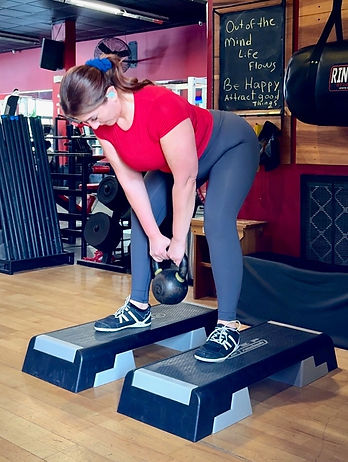
Range of Motion & Planes of Motion
Glutes perform:
• Hip extension
• Hip abduction
• External rotation
Training across multiple planes ensures complete muscular development and joint integrity. Partial training creates partial adaptation.


Recovery & Adaptation
Muscle is built during recovery, not during the workout itself.
Adequate:
• Sleep
• Protein intake
• Caloric support
• Rest days
are required for consistent hypertrophy.
Without recovery, growth plateaus.
The Takeaway
When progressive overload, mechanical tension, appropriate volume, intelligent exercise selection, and recovery are aligned, glute development becomes predictable.
Not random, not genetic luck, not guesswork.

Strong glutes are built through controlled, progressive loading.